By: Madeleine Kleven, Safe & Healthy Food Program Coordinator & Analyst for Keep Antibiotics Working
World Antimicrobial Resistance Awareness Week
November 18 marks the beginning of World Antimicrobial Resistance Awareness Week, a chance to highlight the danger of antibiotic-resistant superbugs. Across the world, public health agencies, medical professionals, veterinarians, researchers, and many others raise awareness about the threat of antibiotic resistance and the precious nature of our antibiotics.
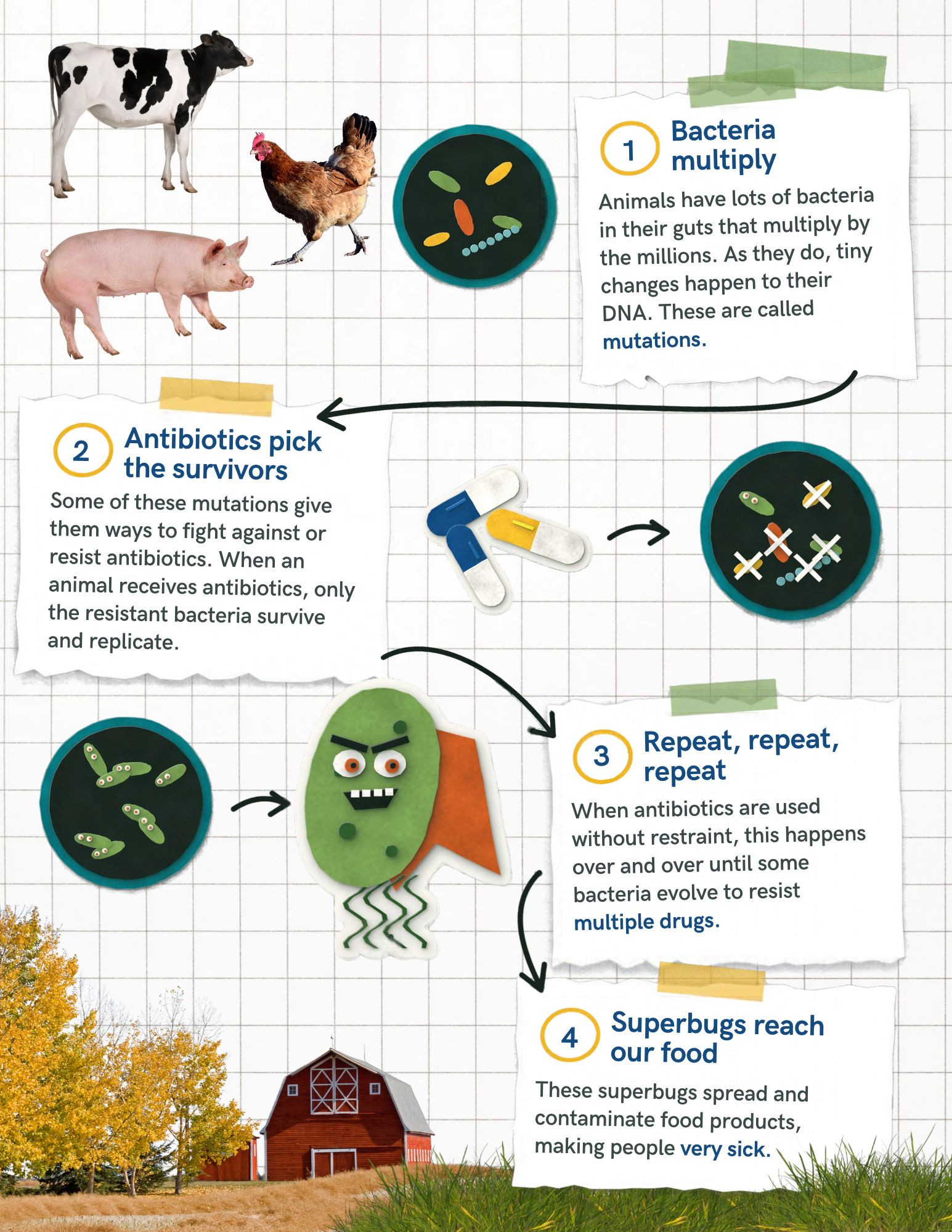
Practically everyone uses an antibiotic at some point in their lives. Whether you need one for an ear infection, delivering a baby, a skin infection, surgery, or chemotherapy, antibiotics are wonderful medical tools and, in some cases, life-saving medicines for treating bacterial infections. Unfortunately, their effectiveness is dwindling as bacteria develop the ability to defeat the drugs designed to kill them. A key reason antibiotics are losing effectiveness is their massive overuse in factory farming. You can see how this process works in the graphic to the left.
A worsening threat
According to the Centers for Disease Control and Prevention’s (CDC) 2026 Antimicrobial Resistance Threats Report, drug-resistant bacteria and fungi cause an estimated 9.7 million infections and 50,800 deaths in the United States each year.
The latest Food and Drug Administration (FDA) data show that sales of medically important antibiotics for food-producing animals rose 16% from 2023 to 2024 - the largest single-year increase since the FDA began requiring drugmakers to report sales data in 2009. These antibiotics are important for treating human infections, and their overuse in animals can fuel antibiotic resistance. Urgent action is needed to reverse this trend.
What federal agencies need to do
While CDC’s latest data and threat report provide helpful information, they mean little if they don’t spur change or action to actively reduce these critical resistance threats. Federal agencies need to do MUCH more to protect people from antibiotic resistance.
Here are 4 critical actions that government agencies can implement to protect the antibiotics we rely on.
Prohibit routine preventive antibiotic use in animals that aren’t sick. Following World Health Organization guidelines.
Set national targets to reduce overall antibiotic use in animal agriculture.
End continuous, long-term antibiotic use and require treatments to be time-limited and resistance-minimizing.
Track actual antibiotic use on farms to improve transparency and accountability.
Corporations must also step up. Fast-food giants and other major food companies have enormous influence over how animals are raised. They must use their purchasing power to demand responsible antibiotic practices throughout their supply chains.
What can you do about antibiotic resistance?
Everyone has a role to play in protecting antibiotics. Here are a couple of things you can do today to help reduce the threat of antibiotic resistance.
Take action: Sign our petition to Taco Bell and urge the company to follow through on its commitment to reduce antibiotic overuse in its meat supply.
Send a message to the FDA and help push them to prohibit routine preventive antibiotic use in animals that aren’t sick.
When purchasing meat, find local, humane farmers that raise animals on pasture. See our consumer resource page.
Learn more! See the graphic on superbugs above and check out other FACT resources to understand more about how superbugs and farms are connected.
Always prepare food safely. Cook meat to safe temperatures and always separate raw meat from other foods in the kitchen to avoid contamination and the spread of resistant germs.
The good news about antibiotic resistance is that we have solutions. But they require action from government agencies, corporations, and all of us. This World Antimicrobial Resistance Awareness Week, let's turn awareness into action and protect the antibiotics we depend on.