Summer/Fall Mentorship Cohort Wrap-Up: Humane Farming in Action
By Katie Meade, Mentorship Program Organizer & Humane Farming Program Associate
As our Summer/Fall Mentorship Cohort comes to a close, we want to recognize the farmers who put focused effort into their humane farming projects. These projects, shaped by daily farm realities and guided by a commitment to animal welfare, represent just a small sample of the hard work and thoughtfulness farmers bring to the job every day.
Across the cohort, farmers completed projects that made a meaningful difference for their animals, communities, and, importantly, for themselves. Increased pasture access, safer footing, better predator protection, and infrastructure upgrades all support healthier animals and more resilient farms. These projects show how humane practices not only improve animal welfare but also increase efficiency, reduce stress, and make farming more sustainable.
Ducks on Pasture at Delta Tails Farm
(Walnut Grove, CA)
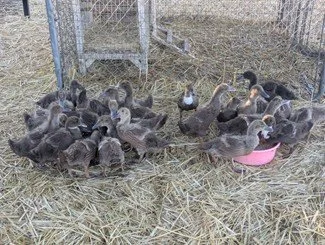
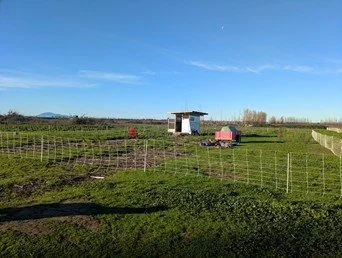
At Delta Tails Farm, Stacey focused on giving her ducks access to pasture. With support from her Mentor, she began by sourcing and brooding Golden 300 hybrid layer ducklings (an ideal breed for her farm's pasture conditions), then designed conversions to a horse trailer, transforming it into a mobile duck house. The final phase focused on preparing the ducks for life on pasture through low-stress handling and, believe it or not— training! This is an important step as it eases the ducks' stress, supports their safety, and makes the daily farm routine seamless for both farmers and ducks alike.
Now on pasture, the ducks forage, bathe, and engage in their natural behaviors while safely housed and protected. Their daily inputs of manure help to build soil health, and the pasture-based system allows Stacey to manage her animals more intentionally.
The project also supports Delta Tails Farm's growth. With increased egg production and a more visible, engaging pasture setup, Stacey is reaching new customers and continuing her mission to show people why duck eggs deserve more attention.
Dry Ground, Happy Cows at Flat Branch Farm
(Taylorville, IL)
At Flat Branch Farm, Lori tackled a problem all livestock farmers know well. Mud. During the wet season, muddy conditions around the barn create challenges for both cows and people; standing and walking in wet, uneven ground can have lasting negative impacts on hoof health, mobility, and overall cow longevity, nevermind a farmer's sanity!
Lori’s ingenious project focused on directing rainwater away from the barn by installing gutters and downspouts, along with pouring a concrete pad in a high-traffic area leading to her milking parlor. After completing her project, Lori’s dairy cows now move on drier, more stable footing, thus reducing the risk of slips, injuries, and hoof issues. The improvements also make daily work easier and safer, especially during milking, when moving cows in and out of the barn smoothly matters for both animals and farmers.
"I'm so glad I found FACT.... We were able to complete a project that I have been wanting to do for a couple of years. It's so great… a program that is focused on animal welfare and sustainable practices rather than just production and profits. The mentoring aspect of the program was wonderful, too. I gained so much more than just funds to complete a project from this experience."
Predator Protection and Time Savings at Mallayo Farm
(Port Hadlock, WA)
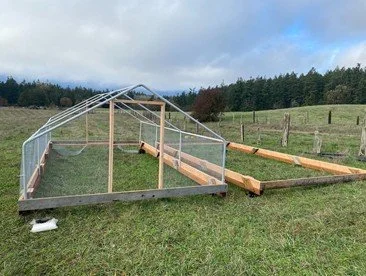
At Mallayo Farm, Theresa’s project addressed two serious and all too common challenges in pasture poultry systems: predation and labor demands. After losing a significant number of broilers to aerial predators and spending long hours managing bird netting, she set out to build a more secure and workable system.
Throughout the project, Theresa worked closely with her mentor, who helped her think through design decisions, troubleshoot details, and identify practical hardware solutions. In the end, Theresa designed and constructed fully enclosed mobile poultry shelters, each measuring 10x20’ to protect her more than 850 broilers while allowing them to remain on pasture. The new setup not only dramatically reduces losses to predators it also shortens daily chore time, making pasture moves quicker and far less stressful for both birds and farmer! The result is a system that supports animal welfare while also making the farm more financially and physically sustainable.
Scaling Pastured Pork with Care at Great Heritage Farm
(Winthrop, MN)
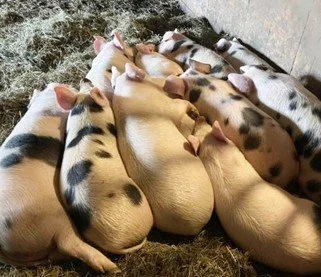
At Great Heritage Farm, Leah focused on building the infrastructure and planning needed to responsibly expand an impressive pastured pork program she began in a previous mentorship session. The project included adding on-farm freezer storage and working closely with her mentor to develop a seasonal farrowing and finishing plan suited to a northern climate.
With reliable freezer space in place, the farm can now store and sell USDA-inspected pork safely and launch a Pastured Pork CSA that complements the farm's existing beef CSA, a fabulous way to scale up! Leah’s pigs are raised outdoors with room to root, graze, and wallow, while maintaining numbers that can be managed well on pasture.
The project also benefits the broader community by offering locally raised, transparently produced pork while strengthening the farm’s overall grazing system.
"Receiving this award has allowed us to raise pigs in a way that honors their natural instincts and supports their wellbeing every day. With the new freezer storage in place, we can scale our pork program responsibly—raising only the number of pigs we can manage well on pasture, with room to graze, root, wallow, and live outdoors as they’re meant to. This project strengthened our ability to offer a humane, low-stress life for our animals, and I’m deeply grateful for the support that made that possible."
From Projects to Lasting Change
These projects show what humane farming looks like when it is grounded in real-world conditions, goals, and abilities. Improvements that support animal welfare often go hand in hand with better efficiency, safer working conditions, and stronger farm businesses. When animals are less stressed and better cared for, farmers are better able to manage their time, protect their bodies, and plan for the future.
Through mentorship, shared knowledge, and targeted support, farmers in this cohort continue to make meaningful changes that benefit their animals, their land, and their communities for years to come. This is how long-term, humane farming systems are built: one thoughtful project at a time, and a strong network of support and care for each other.